.png?ext=.png)
The grocery industry's leading event wrapped three days in Las Vegas this week, with AI-powered shopping, a new definition of value and the rise of retail media dominating the agenda.
.jpg "_ALF5566-(1).jpg")
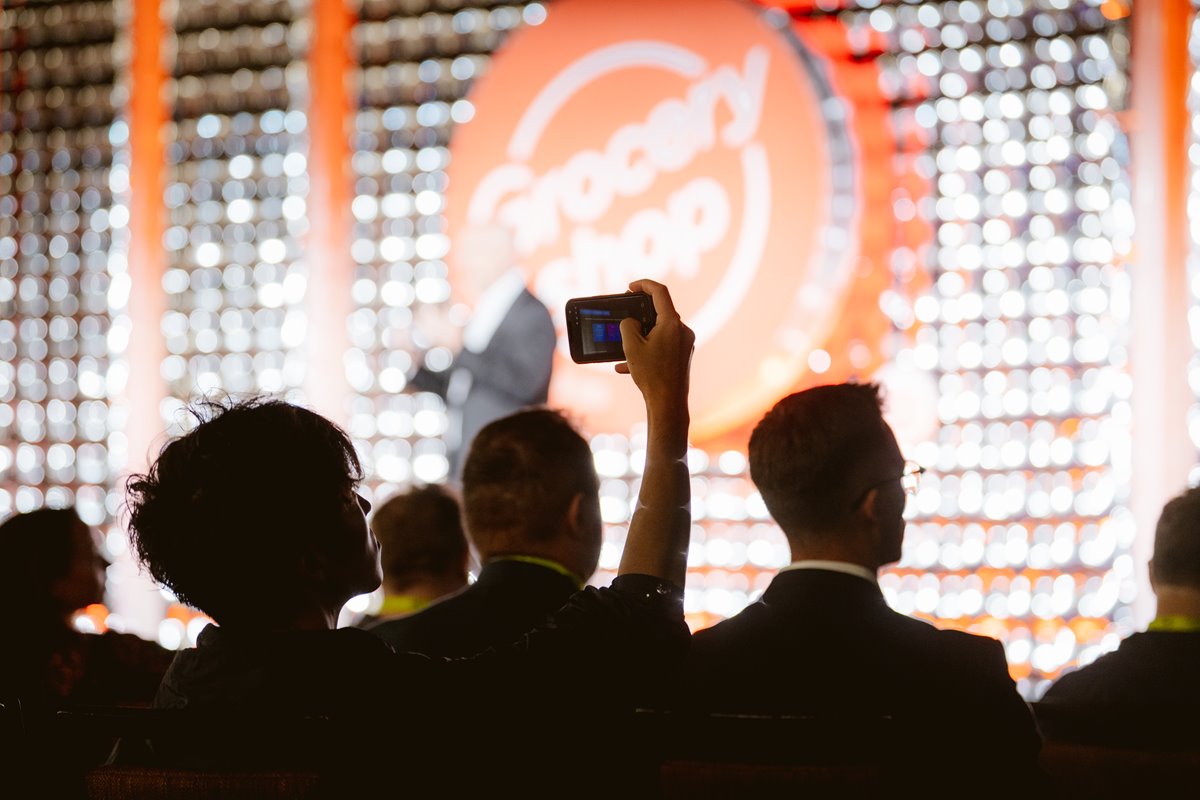
LAS VEGAS, Sept. 24, 2026: Groceryshop 2026, the leading event for the everyday retail ecosystem, concluded its three-day run at Mandalay Bay in Las Vegas today.
The event brought together more than 4,000 retail leaders, including senior executives from grocery, convenience, pharmacy, dollar and club retail, alongside brands, technology providers and startups. More than 30,000 co-matched business meetings took place through Groceryshop's Meetup program.
Across more than 150 speakers, one message came through: the grocery basket is being reshaped from several directions at once.
Three themes led the conversation: AI becoming the consumer's first stop in their shopping journey; value being redefined by stretched budgets and GLP-1 medications; and retail media shifting from an advertising channel to a core part of the retail ecosystem.
Rocquan Lucas, VP of Content at Groceryshop, said: "What we heard at Groceryshop 2026 is that the average grocery shopping cart is about to change more in the next few years than it has in decades as shoppers lean on AI assistants to support their meal planning and cart building, become more selective with their purchases, and in the rise of GLP-1 adoption, shift what and how much they consume.
"That puts real pressure on grocers and brands to make their product data machine readable and deliver the right product and assortment for an evolving consumer."
AI-powered shopping: From assistant to agent
Instacart CEO Chris Rogers opened the show with a bold call: "I believe that AI is going to transform grocery more than any other technology shift to date." He said that instead of adding items one by one, shoppers will ask for a healthy meal their kids will eat for under $40 and get a full cart in seconds, based on their budget, their usual store and what's actually on the shelf.
With 1.6 billion orders to date, 2 billion items in its catalog and 10 million signals a day, Instacart is in a strong position. Rogers said, "it's up to us to make sure that the absolute best agentic experiences are on our own channels."
DoorDash Co-Founder Andy Fang said the goal is to take friction out of shopping, with AI picking up on things like dietary needs, household size and favorite brands while the shopper stays in control. "AI is not going to make every single decision for you, but it's going to make it easier for you to make decisions," he said.
He also said shoppers using Ask DoorDash, its AI shopping assistant, now have baskets 50% bigger than orders placed without AI, check out five times faster and buy 60% more unique items. Those figures are up from 35% bigger baskets and 3x faster checkout when it launched in June.
Retailers are already putting AI to work. Kroger's Chief Digital Officer, Yael Cosset outlined Kroger's AI strategy, from an AI Shopping Assistant that plans meals around budget and dietary needs to AI training for more than 400,000 associates. Dutch grocer Albert Heijn's in-app AI chef, Steijn, now has 1.1 million active users, who spend 56% more than non-users.
Cosset said, "The grocery winners in the age of AI will be the retailer who can earn our trust, your trust, all of our trust in satisfying the family dinner."
Shoppers are ready. Accenture found that 75% of global consumers would trust an AI agent more than their best friend, and 56% of loyal shoppers would switch brands if their agent recommended a better option. As Karen Fang Grant, Managing Director and Global Research Lead at Accenture, put it, "AI will find you out if you are not truly differentiated."
But the data foundation is holding many back. Incisiv research shared at the show found only 7% of enterprises have scaled AI across the business. DoorDash's Andy Fang called clean product data a "no regrets move" for retailers, noting that almost 95% of DoorDash customers choose an item with a good product description over one without. "AI is only as good as the data that's being fed to it," he said.
Value and wellness: Every trip is recalculated
Nicole Kalita, SVP and Managing Director of US Retail at NielsenIQ, said the "average shopper" no longer exists. Financially stretched households now make up 33% of the US population, up 17% since 2022, and grocery has lost $5 billion in trips over three years as shoppers move to club and mass. "Consumers are no longer hunting for a deal, they're assembling one," she said.
At the same time, GLP-1 medications are speeding up the shift toward protein, nutrition and cleaner labels. "People are spending more money on food than ever before on less calories and less ultra-processed food" said Talia Monroe, SVP of Commercial Growth at Chobani.
Unilever Wellbeing CEO Jostein Solheim described GLP-1s as the ultimate act of taking charge of your own health, with major implications for what consumers need from food.
Sam's Club is one of the retailers winning those trips by making value about more than price. EVP and Chief Merchant Myron Frazier said Sam's Club charges the same price online as in its clubs, with no upcharge for delivery. He said the club applies the same thinking to checkout, delivery and meal solutions as it does to the products on its shelves: "Everything that we do, we treat it as an item and we look to add more member value."
Retail media: The store becomes the screen
Independent analyst Andrew Lipsman called in-store retail media a $20 billion opportunity. Stores capture 5% of consumer time but get just 0.1% of ad spend. "Grocery is the new TV, or at least it can be," he said. CVS Media Exchange is already proving it, with 26,000 new point-of-sale devices, 2,500 waiting-area screens and a Dove campaign that drove a 51% new-to-brand lift.
Measurement, however, remains a sticking point, according to new EMARKETER and Bain research previewed at Groceryshop ahead of its October publication.
Sarah Marzano, Principal Analyst, Retail & Commerce Media at EMARKETER shared that only 31% of retail media leaders are confident their revenue is truly incremental.
The research shows that AI adds another layer of uncertainty. Three of the top five forces networks expect to disrupt their revenue are AI-related. The biggest worry is that AI will change how media buyers purchase retail media in the first place. But networks aren't standing still. Retailers' own AI ads ranked as the second-biggest expected revenue driver, and 77% of networks are testing or investing in new AI ad formats. "AI is both a threat to today's economics as well as an opportunity to build the next generation of monetization capabilities," said Marzano.
On the brand side, just 22% are confident they can measure return on investment, and most spread their budgets across only three to 10 of the roughly 100 US retail media networks, according to Kantar.
For brands, sales growth is what counts. "Where we drive the growth, there is unlimited budget," said Jacques Hagopian, SVP of Brand Operations at P&G, who called for 12- to 18-month joint plans that line up supply, in-store display and media. "The best marketing in the world cannot sell a product that's not there."
That kind of joint planning is already paying off. A New Year campaign from Danone and Target's Roundel delivered 131 million impressions and reached about 233,000 new Target shoppers. "Retail media is really more than just a media buy," said Erin Anderson, VP of Customer Commerce at Danone North America.
Announcements at Groceryshop 2026
- Instacart and Gopuff – Gopuff will join the Instacart Marketplace and use Instacart Carrot Ads to power advertising on its own storefront, extending campaigns from Instacart's 9,000+ brand advertisers to Gopuff's millions of on-demand shoppers. Gopuff and BevMo! bring the Carrot Ads network to more than 310 partners.
- Kroger – Kroger detailed its AI strategy, built on its loyalty data and a portfolio of proprietary and third-party models, and outlined a future of "grocery as a managed service" where AI agents plan, shop and fulfill based on customer goals.
- DoorDash - DoorDash introduced Brand Center, a platform built for the marketing, supply chain, category, ecommerce, and national account teams to get a clearer view of what's driving growth across the digital and physical shelf.
- California Pizza Kitchen – California Pizza Kitchen announced a new line of frozen appetizers with Golden West Food Group, due in stores next year.
About Groceryshop
A Hyve Group event, Groceryshop is a next-generation global retail event whose purpose is to bring together and connect entire sector ecosystems from all corners of the globe. It is the world's only ecosystem event for everyday retail - bringing together retailers, brands, technology providers, investors and startups across grocery, mass, club, drug, dollar, convenience, pharmacy and CPG. The event brings together 4,000+ leaders from 50+ countries and is recognized for its Meetup program - the largest meetings program in everyday retail - alongside its high-calibre content agenda.
Press contact: Menreet Kaur, Global Head of Communications, Shoptalk & Groceryshop / [email protected]